


Live
In Cape Town
Cape Town is easy to admire from a distance. It’s incredible to visit on holiday. The mountain, the coastline, the beaches, the neighbourhoods, the design culture, the food, the light. We get it. But to understand what it is like to live in Cape Town, you need to take a closer, more indepth look at the city. The real city. To understand how daily life unfolds across a place that is beautiful, complex, varied, and constantly in motion.
Cape Town is shaped by outdoor living, strong neighbourhood identity, work and study, family routine, public space, culture, and the systems that support urban life. It is also shaped by history, inequality, and the very different ways people experience the city across its communities.
To understand what it could mean to live in Cape Town, you need both sides of the picture: the natural setting that draws people in, and the lived reality that gives the city its depth. The City’s own planning framework is built around improving resilience, inclusion, better service delivery, infrastructure, and long-term quality of life across the metro, which is part of what makes Cape Town more than a lifestyle destination. So let’s take a deeper look.
Key takeaways
- Live in Cape Town for a blend of vibrant city life and breathtaking nature.
- There are many neighbourhood choices. These will shape your daily experience.
- Quality of life is a major draw.
- People often choose to live in Cape Town for its strong sense of place.
- Be aware that traffic and distance affect daily life.
- Many families, professionals, and remote workers choose to live in Cape Town.
- Safety depends on area and context.
- Housing pressure is real.
- Cape Town is beautiful, complex, and rewarding.

Cape Town Districts & Neighbourhoods
Get to know the City

So, what does it feel like to live in Cape Town?
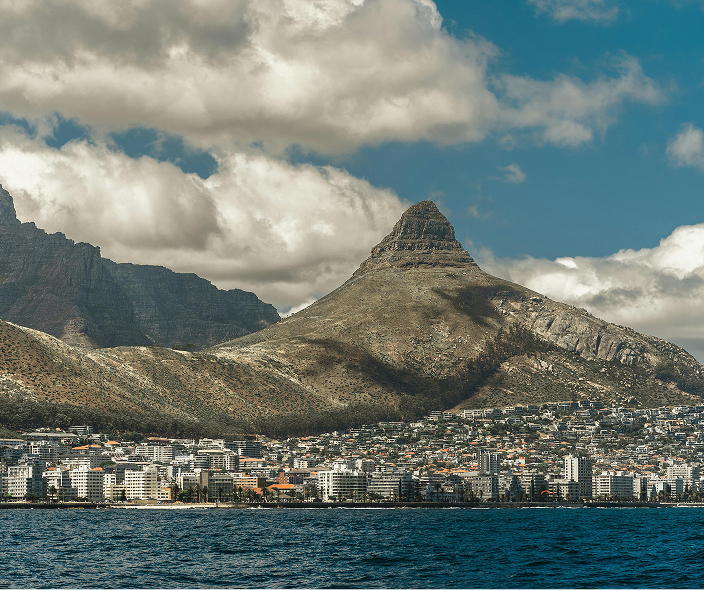
What often stands out first to people who live in Cape Town is how present the natural world is in everyday life. When you live in the Mothercity, the mountain is a daily feature. The ocean is not something you save for holidays. Beaches, walking routes, parks, sport, green space, and time outdoors are woven into the fabric of everyday life. That changes how life feels. It can feel more open, more active, and more connected to your surroundings than many other urban experiences in South Africa.
Cape Town also has a strong sense of self. The city is energetic. Alive. You see that in its architecture, its food, its universities, its neighbourhood cultures, its creative energy, theatres and galleries, and the way people speak about the city with both affection and place. There is connection here, and context.
People love living in Cape Town. But we are under no illusions that living in the most beautiful city in the world means we’re in permanent ‘holiday mode’.
That honesty matters. Cape Town is a real city with real pressures. Many of those pressures are tied to the spatial legacy of apartheid planning, which still shapes inequality, poverty, distance from opportunity, and how differently people experience daily life across the city. That does not erase Cape Town’s appeal. It simply makes any conversation about living in Cape Town truthful.
Expect a city of very different neighbourhoods
One of Cape Town’s strengths is that it does not offer only one version of city life. It offers many.
Some of Cape Town’s neighbourhoods feel urban, fast-moving, and closely tied to offices, restaurants, culture, and nightlife. Others feel greener, quieter, and more spacious. Some are strongly coastal. Others are chosen less for grandeur and more for routine, practicality, schools, access, or long-term stability. That variety is part of what makes living in Cape Town so appealing to such a wide mix of demographics.
It also means that, “Where is the best place to live in Cape Town?” is a tricky question to answer. Cape Town is more personal than that. The better question is rather, “Where is the best suburb for me?”
The experience you have here depends a great deal on what kind of life you want to build. If you are young and working, your version of Cape Town may look very different from that of a family, a student, a retiree, an entrepreneur, or an investor. That flexibility is one of the city’s real advantages. Cape Town can hold many different ways of living without losing its overall identity.
Curious? Explore our suburbs when you visit Cape Town.

Is Cape Town good for families?
Absolutely. Cape Town offers families a whole lot. When you and your family live in Cape Town, you have the possibility of building a life that has room to grow, and still feels grounded. Cape Town offers neighbourhood variety, outdoor access, sport, amenities, and a sense that daily routine can work well when the right area is chosen.
Family life here is often shaped by ordinary things: school runs, sport, parks, beaches, shops, after-school activities, and how far everything sits from home. That may sound simple, but it is exactly the kind of practical texture that determines whether a city feels liveable over time. In Cape Town, many families are drawn not only by the look of the place, but by the possibility of building a routine that allows the whole family – sometimes multi-generational; grandparents, great-grandparents, children, pets, the whole lot – to put down roots and flourish.
Great for families: A guide to Cape Town’s hidden coastal gems
Education, talent, and the city’s future
- UCT is a major African hub for climate change research and training.
- UWC’s Global Environmental Law Centre focuses on climate change and sustainability, as well as biodiversity, ecosystems, and oceans.
- CPUT’s official research focus areas include environment, climate change and sustainability, with specific emphasis on water security, ocean health, and environmental remediation.

Safety, context, and the reality of living in the city
Safety is part of any honest conversation about life in Cape Town, but it makes the most sense when seen in context. Locals rarely understand safety as a simple ranking of suburbs. We tend to think about it through day-to-day liveability: how active an area feels, what routine looks like, how easy movement is, what security measures are in place, and whether a neighbourhood fits the realities of your life. That is a more useful way of thinking about the city than trying to flatten it into simplistic lists.
It is also important to understand why Cape Town feels so different from one area to the next. The city’s spatial form was shaped by apartheid planning, and that legacy still affects distance, access, social cohesion, and the distribution of opportunity. The City’s own strategies acknowledge that inequality, poverty, and separation remain central urban challenges, and that spatial integration and resilience are part of the work still being done.
And the city is investing a whole lot into making this a reality. So, when you think about Cape Town’s strengths, you also have to make room for the structural realities that still shape how differently the city is experienced. And the vision that is actively shaping its future.
Public space, city systems, and everyday quality of life
A great contributor to Cape Town’s extraordinary quality of life is due to the parts of the city people often use without giving them much thought. Our public parks, sports grounds, community facilities, beaches, coastal areas, green spaces, and the wider condition of neighbourhood infrastructure. These all play a role in how the city is experienced from week to week.
That civic layer matters more than people sometimes realise. The City’s constant work across recreation and parks, environmental management, and climate resilience helps shape whether public spaces are usable. It ensures natural areas are protected, and neighbourhoods remain healthy, functional, and better prepared for long-term pressure.
Cape Town’s official climate and resilience planning is explicitly tied to adaptation, public wellbeing, and the protection of both communities and natural systems.
In practice, this affects the texture of daily life. It influences whether children have places to play, whether beaches and public spaces are cared for, whether neighbourhoods feel supported by working civic infrastructure, and whether the city is planning ahead for risks such as heat, flooding, drought, and other environmental strain. These are not always the most visible parts of urban life, but they are part of what gives Cape Town depth as a place to live.

Cape Town’s transport, services, and how the city works
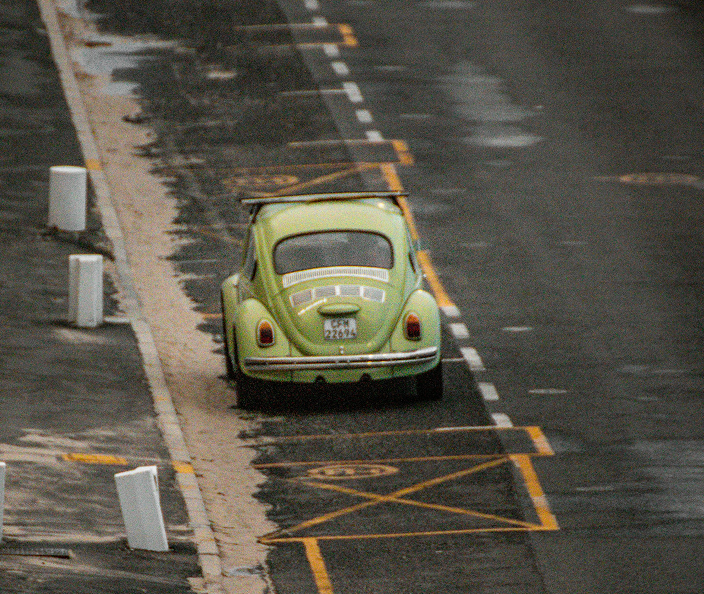
Where you live in Cape Town can change your experience of the city completely. Commute patterns, school access, road connections, work hubs, traffic, and everyday convenience all shape the practical experience of living here.
That is why the city is often experienced less through landmarks than through movement: the school run, the drive to work, the walk to a café, the route to the beach, the distance to the shops, the time it takes to get where you need to go.
While many residents have their own cars, Cape Town’s public transport and broader spatial planning sit inside a bigger City effort to improve integration and access. The City’s development plans link transport, infrastructure, and land use to a more inclusive urban form, recognising that distance and disconnection remain central realities for many residents. So while transport is often experienced personally and practically, it is also part of the wider story of how the city functions and where it is trying to improve.
Work, ambition, and modern city life
Cape Town appeals to people as a place to live at different stages of life, for different reasons. It has long attracted students, professionals, families, creatives, and entrepreneurs, but one of the city’s more recent strengths is how well it supports flexible and internationally connected ways of working.
Hybrid work, remote work, entrepreneurial careers, and portfolio lives all fit fairly naturally into Cape Town’s wider mix of neighbourhood choice, lifestyle appeal, and strong sense of place.
See what it’s like to work in Cape Town.


Cape Town’s appeal to foreign professionals
Cape Town has become increasingly attractive to foreign professionals, especially if your work is remote, flexible, or internationally connected. It is easy to see why.
The city offers neighbourhood variety, strong amenities, a visible café and coworking culture, and a natural setting that can make daily life feel more rewarding. But for foreign nationals, living here is never only about lifestyle. It is also shaped by immigration status, remote working visa applications, processing systems, and the practical realities of staying longer term.
That is worth acknowledging, because the fuller story is the more useful one. Cape Town can offer a compelling mix of work, lifestyle, and place, but for some foreign residents, the experience also includes administrative uncertainty and the slower-moving realities of living in South Africa. That tension does not define the city, but it is part of an honest overview of how life here can feel for those from other countries.
Cost of living in Cape Town and local pressures
Cape Town is often experienced as a premium city by South African standards, especially when it comes to housing in high-demand parts of the metro. But the cost story is more nuanced than that. People do not only pay for a property. They weigh cost against neighbourhood character, outdoor access, schools, commute patterns, convenience, and the kind of life they want to build. A better way of living.
At the same time, it is important not to romanticise that premium positioning. Housing pressure, short-term rentals, inequality, and the city’s long-standing spatial divides all shape what affordability means in practice. A credible overview of Cape Town needs room for both realities: the city’s undeniable desirability and the local pressures that come with it.
Short-term rentals are part of the housing conversation
In parts of the CBD and Atlantic Seaboard, local frustration around short-term rentals is real. The rise of short-stay accommodation has added pressure to an already stretched housing market, particularly in high-demand areas.
The City has already moved to respond. In February 2026, it proposed the Short-Term Letting By-law aimed at improving rates compliance for commercial-scale short-term letting. It is possible to appreciate the city’s global appeal and still recognise the local pressures that come with popularity. In fact, that balance is part of what makes for a more credible, more local, and more responsible view of Cape Town.

How does living in Cape Town compare to other South African cities?
Cape Town is often compared with Johannesburg, Durban, and Pretoria – the other main city centres in South Africa. We try not to say that Cape Town is “better” than any other city. Rather, it is about the options Cape Town offers you for the life you want to create. Natural setting, neighbourhood variety, outdoor living, strong cultural identity, major tertiary institutions, public visibility, and a city government that places resilience, infrastructure, and long-term planning at the centre of how it talks about the future.
That combination gives Cape Town a particular kind of advantage. And appeal. It feels globally visible, but still rooted in its own identity. It can feel ambitious and relaxed, beautiful and demanding, local and international, all at once. For many residents, that mix is part of what makes living in Cape Town feel so compelling.
Want to live in Cape Town? Come and see for yourself
If you’re curious, the city is waiting for you. Yes, it will take your breath away with its natural beauty. Yes, it offers you an enviable quality of life in the right circumstances. Yes, it has a powerful sense of place that can make ordinary life feel richer. But it is also a city of contrast, memory, established public systems, neighbourhood realities, institutional depth, dynamic pressure, and rich colour. It is not only mountain views and coastal living. It is also a city still working through the realities of how people live across a variety of landscapes.
That is what makes Cape Town compelling as a place to live. That it offers a distinctive way of living shaped by nature, history, community, possibility, and a strong sense of place. Over time, that becomes the real story of the city. And maybe a part of your story too.
Find everything you need to know when you visit Cape Town.

FAQ’s
about living in Cape Town
For many people, yes. Cape Town offers natural beauty, varied neighbourhoods, strong lifestyle appeal, and a broad mix of work, family, education, and leisure opportunities. Your experience depends heavily on where you live and what kind of routine you are building, but the city’s overall appeal is very real.
There is no one-size-fits-all answer. There are no ‘best areas’ – rather, you need to find what is ‘best for you’. In Cape Town, family life often works best where location and routine feels most manageable.
Yes. Cape Town offers a broad spread of public, private, international, tertiary, and specialist education options. For many households, education is one of the biggest factors shaping where they choose to live.
Cape Town is often chosen for lifestyle, environment, and neighbourhood character, while Johannesburg is often chosen for business concentration and commercial proximity. They offer different kinds of urban life, and the better fit depends on what matters most to you.
You should understand that Cape Town is not one single experience. Neighbourhood differences, traffic, schooling, cost, lifestyle, and daily routine all shape how the city feels in practice. The more honest your expectations are, the more accurately you are likely to understand what living here is really like.


Study
Cape Town is Africa’s most desirable city for students. Now that you can study virtually from anywhere, why not do it from Cape Town with some of the most picturesque college campuses in South Africa.


Play
Cape Town is an adventure seeker’s paradise. You could stay for weeks and still not tick off all the activities on offer. From paragliding to kayaking, kitesurfing and sand boarding, Cape town offers all the high speed thrills.